February 15, 2026·5 min read
The Terraform Blueprint (2026): How to Structure, Scale & Secure Your Infrastructure‑as‑Code
devopscloudterraforminfrastructure-as-codecloud-security
By — Cloud | DevSecOps | SRE | Platform Engineering
Table of Contents
- Introduction
- Repository Architecture
- Module Design Principles
- Environment & State Structure
- IaC Security & Scanning
- Secure Terraform Execution
- Drift Detection & Observability
- Terraform Maturity Framework
- Conclusion
1. Introduction
Terraform has evolved from a simple provisioning tool into the backbone of modern cloud infrastructure. Today, teams rely on it to manage thousands of resources across AWS, Azure, and GCP — yet scaling Terraform successfully is harder than most engineering leaders expect.
Misconfigured modules, unmanaged drift, weak pipelines, and security gaps often become hidden liabilities inside cloud environments. The good news? These problems are completely avoidable with the right structure, patterns, and guardrails.
This guide distills the core principles, best practices, and real‑world patterns that high‑performing cloud, DevOps, and SRE teams use to keep Terraform secure, predictable, and scalable.
From repository design to IaC scanning, CI/CD hardening, drift detection, and multi‑environment state strategy — this blueprint gives you everything you need to build Terraform the right way.
Whether you’re improving an existing Terraform setup or building a new foundation, this framework will help you deliver reliable IaC with confidence.
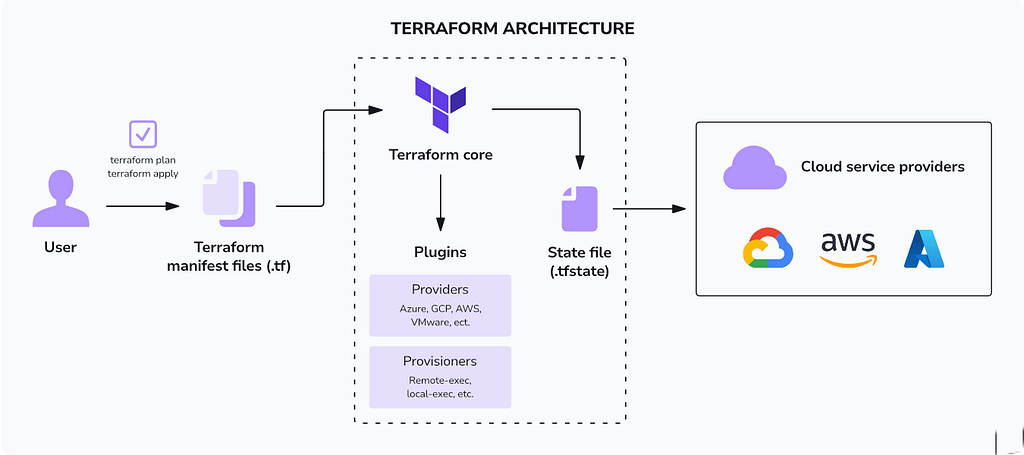
2. Repository Architecture for Scalable IaC
2.1 Mono‑Repo
Strengths:
• Centralized governance
• Consistent patterns
• Easier module management
Weaknesses:
• Can slow down independent teams
2.2 Service‑Scoped Repos
Strengths:
• Fast iteration per team
• Clear ownership boundaries
Weaknesses:
• Duplication
• Harder to enforce universal standards
2.3 Hybrid (Recommended)
The core‑infra → module‑registry → app‑repo model ensures:
• cross‑team consistency
• ability to scale
• module reusability
• minimal duplication
Example for Hybrid:
repo-root/
 ├── core-infra/
 ├── modules/
 │    ├── vpc/
 │    ├── eks/
 │    ├── iam/
 ├── application-services/
 │    ├── service-a/
 │    ├── service-b/
3. Module Design Principles That Prevent Chaos
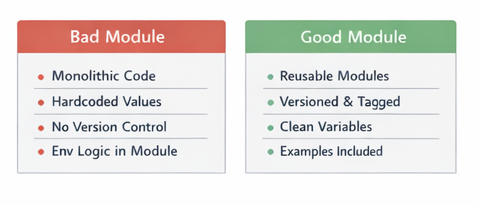
3.1 What a Good Module Looks Like
A strong module is:
• small, composable, and reusable
• predictable (inputs/outputs documented)
• version‑pinned
• never environment‑specific
module "storage" {
  source = "git::ssh://example.com/storage.git?ref=v1.3.0"
  name   = var.name
  region = var.region
}
3.2 Semantic Versioning
1.0.0 → breaking changes
1.1.0 → enhancements (safe)
1.1.1 → fixes
Pin versions like this:
module "vpc" {
  source  = "git::ssh://example.com/vpc.git?ref=v1.2.3"
}
4. Environment Isolation & State Structure
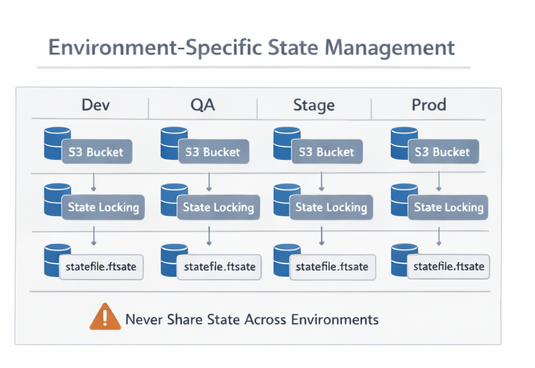
State mistakes are one of the fastest ways to break production.
4.1 Isolate Everything
Use a separate state per:
• dev
• qa
• staging
• prod
Never mix them.
4.2 Backend Best Practices
AWS: S3 backend + native S3 state locking
Azure: Storage Account + blob locking
GCP: GCS + lock management through CI pipeline
terraform {
  backend "s3" {
    bucket       = "mycompany-terraform-prod"
    key          = "network/terraform.tfstate"
    region       = "us-east-1"
    use_lockfile = true
  }
}
5. IaC Security, Scanning & Policy Enforcement
This is one of the most important parts of the entire blueprint.
5.1 Pre‑Commit Hooks (Local)
Run automatically before committing:
terraform fmt
terraform validate
tflint
tfsec
checkov
5.2 Security Scanners
Tfsec
• IAM issues
• Network exposure
• Missing encryption
ERROR: aws-s3-enable-bucket-encryption
S3 Bucket encryption is not enabled.
Checkov
• Compliance rules
• Cloud‑specific misconfigurations
• Data leakage prevention
5.3 Policy as Code
Recommended engines:
• OPA / Conftest
• HashiCorp Sentinel
Example: deny untagged resources
deny[msg] {
  input.resource.tags == {}
  msg = "All resources must include tags."
}
6. Secure Terraform Execution
❌ Never Run Terraform Locally
Local terraform apply introduces:
• drift
• audit gaps
• privilege risks
• shadow infrastructure
✅ Always Use CI/CD Runners
6.1 Secure Execution Identity
Best practices:
• Federated identities (OIDC)
• No static credentials
• Least‑privilege roles
• Short‑lived tokens
6.2 Recommended Pipeline
+-----------------------------+
|        Developer           |
|      Git Commit/PR         |
+-------------+--------------+
              |
              v
+-------------+--------------+
|      Harness CI Stage      |
|----------------------------|
| - Checkout                 |
| - Build & Test             |
| - SAST/DAST                |
| - Build Docker Image       |
| - Push to Artifact Repo    |
+-------------+--------------+
              |
              v
+-------------+--------------+
| Harness CD: Terraform IaC  |
|----------------------------|
| terraform init             |
| terraform fmt/validate     |
| tflint / tfsec / checkov   |
| terraform plan             |
| Approval Step              |
| terraform apply            |
+-------------+--------------+
              |
              v
+-------------+--------------+
|  Harness Deploy Stage      |
|----------------------------|
| Helm / K8s |
| Health Checks              |
| Feature Flags (optional)   |
+-------------+--------------+
              |
              v
+-------------+--------------+
| Observability & Governance |
|----------------------------|
| Logs, Metrics, Traces      |
| Drift Detection            |
| Notifications              |
+----------------------------+
7. Drift Detection & Observability
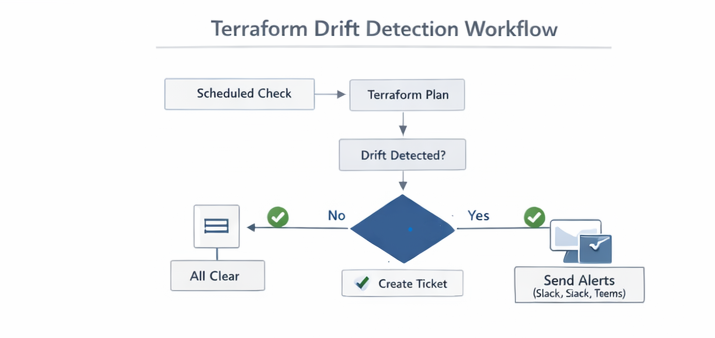
7.1 Automated Drift Checks
Run daily/weekly:
terraform plan -detailed-exitcode
if [ $? -eq 2 ]; then
  echo "Drift Detected!"
fi
Send output to:
• Slack
• Teams
• Jira
• GitHub issues
7.2 Observability Alignment
Integrate Terraform outputs with:
• Datadog
• Prometheus
• New Relic
• CloudWatch
• Azure Monitor
• GCP Monitoring
This enables cross‑visibility between configuration and runtime signals.
8. Terraform Maturity Framework
A simple view of Terraform maturity:
Level 1 — Basic:
• Local applies
• Zero scanning
Level 2 — Standardized:
• Structured repos
• Versioned modules
Level 3 — Governed:
• Scanning enforced
• Policy‑as‑code
• Drift detection
Level 4 — Operational Excellence:
• Multi‑cloud consistency
• IaC observability
Level 5 — Intelligent Automation:
• Predictive analysis
• AI‑assisted Terraform plans
• Automated remediation
9. Conclusion
A well‑designed Terraform ecosystem isn’t just about writing modules or running plans — it’s about building a foundation that teams can trust as they scale. When your IaC is structured, secure, reviewed, tested, and continuously validated through automation, it becomes a force multiplier for every cloud initiative that follows.
The patterns in this blueprint are not theoretical. They’re the practices that consistently separate stable, predictable cloud environments from ones held together by tribal knowledge and luck. Whether you’re modernizing legacy infrastructure or enabling a high‑velocity platform team, adopting these principles will help you eliminate drift, reduce risk, and accelerate delivery with confidence.
Infrastructure‑as‑Code should empower teams, not slow them down. With the right pipelines, security checks, and execution workflows in place, Terraform becomes a strategic advantage — unlocking a cloud environment that is reproducible, scalable, and aligned with the operational rigor today’s engineering landscape demands.
If you’re investing in Terraform today, invest in doing it right. Your future platform will thank you.
If you found this guide helpful, follow me here on Medium for more deep‑dives on Cloud Architecture, DevSecOps, Terraform, Kubernetes, SRE practices, CI/CD pipelines, and Platform Engineering.
I publish hands‑on insights, real implementation patterns, and practical frameworks to help engineers and leaders build secure, scalable, and reliable cloud platforms.
➡️ Follow for more content like this.
➡️ Share this article if it helped you.
The Terraform Blueprint (2026): How to Structure, Scale & Secure Your Infrastructure‑as‑Code was originally published in AWS Tip on Medium, where people are continuing the conversation by highlighting and responding to this story.
— Sai Cherukuri —← More Articles